Recycling equipment manufacturerFor a green future
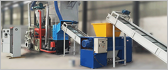
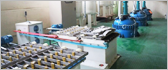
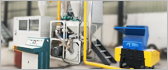
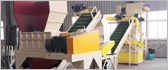


In the process of electronic waste recycling, the dismantling of PCB circuit boards is a critical stage that determines both the efficiency of metal recovery and the purity of subsequent sorting. The primary function of an automated circuit board dismantling machine is to achieve the rapid, automated separation of electronic components from the substrate—utilizing a combination of high-temperature desoldering and mechanical separation—thereby minimizing manual labor and enhancing the overall efficiency of e-waste resource recovery.
Traditional PCB dismantling methods largely rely on manual heating and hand-dismantling. This approach is not only inefficient but also entails high labor costs and significant safety risks when dealing with large volumes of discarded computer motherboards, communication boards, and appliance control boards. This is particularly true for industrial-grade circuit boards—which are densely populated with chips, capacitors, connectors, and solder joints—where the speed of manual dismantling often falls short of the requirements for large-scale recycling operations.
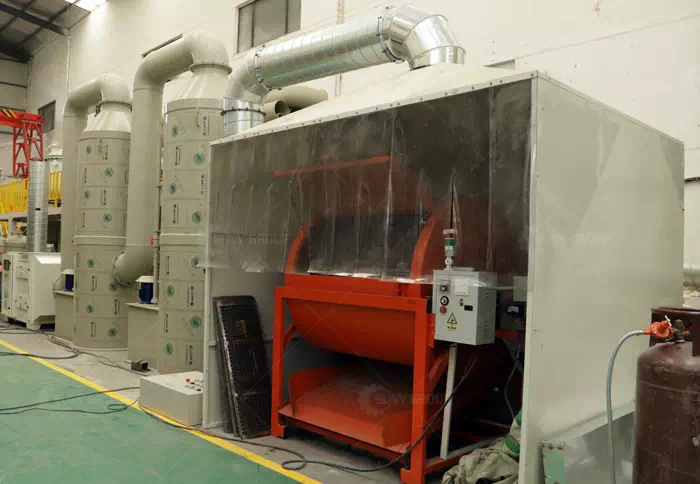
Automatic Circuit Board Disassembly Machine
An automated circuit board dismantling machine typically consists of a heating system, a roller conveyor system, a vibrating screening system, and an exhaust gas treatment unit. The equipment employs high-temperature heating to bring the solder to a molten state; subsequently, through a combination of roller agitation and mechanical vibration, the electronic components are automatically detached from the PCB substrate and then sorted and collected via a screening mechanism.
Currently, the heating temperatures of standard equipment on the market are typically controlled within the range of 200°C to 350°C, making them compatible with the vast majority of circuit boards utilizing tin-based soldering. Compared to traditional methods involving open flames or direct combustion, these automated systems offer more stable temperature control, inflict less damage upon the copper circuitry and substrate material, and significantly reduce the generation of harmful fumes.
For a mature PCB dismantling system, the core value lies not merely in the application of "high temperature," but rather in the efficiency of thermal energy utilization and its capacity for continuous-flow processing.
The heating section typically employs either electric or gas-fired heating structures, with continuous-feed roller heating configurations being particularly well-suited for medium-to-large-scale e-waste recycling facilities. As circuit boards enter the machine, the solder gradually softens; the components then automatically detach during the roller-agitation process, thereby preventing the commingling of metals that often results from violent mechanical crushing.
Subsequently, the materials enter the vibrating screening zone, where electronic components of varying sizes are automatically classified. For instance, components such as IC chips, capacitors, metal pins/connectors, and the bare board substrates are directed into separate collection bins, thereby facilitating the subsequent extraction of precious metals and the sorting of base metals.
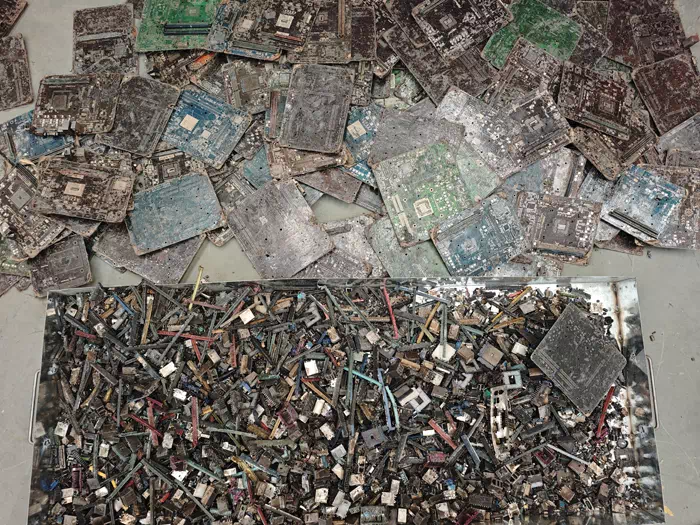
Output Material from Disassembled Circuit Boards
Compared to direct shredding processes, the "dismantle-first, shred-later" approach offers a distinct advantage: it enables the upfront separation of high-value components. Certain items—such as specific IC chips and interface modules—may still retain residual value for reuse or refurbishment, rather than being immediately fed into the metal shredding stream. This is a key reason why an increasing number of e-waste recycling enterprises are beginning to adopt pre-dismantling processes.
With the growing volume of discarded computers, communication equipment, and new energy control systems, the volume of recycled PCBs is continuously on the rise. Circuit boards contain a variety of recyclable metals—including copper, tin, gold, silver, and palladium—with copper content typically ranging from 15% to 25%; in some high-end communication boards, the precious metal content actually exceeds that found in natural ores.
The value of an automatic PCB dismantling machine lies not merely in accelerating the dismantling process, but—more importantly—in enhancing the purity of the metals recovered during downstream processing. This is because the prior separation of components significantly reduces the operational load on subsequent crushing and sorting systems, thereby minimizing the rate of cross-contamination among copper powder, resin powder, and metal particles.
If you require further information regarding the technical specifications, processing capacity, operational videos, or complete system solutions for the Automatic Circuit Board Disassembly Machine, please feel free to request detailed materials.
Thank you for your interest in suny group. If you want to learn more about our E-waste recycling plant, copper wire recycling machine and other machines, Contact us now to find out what we can do for you next project!E-mail:[email protected] | Whatsapp:+8613674945231