Recycling equipment manufacturerFor a green future
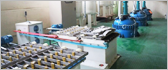
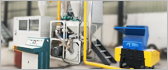
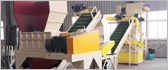
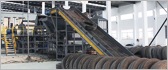


The core of recycling spent lead-acid batteries lies not merely in simple dismantling, but in using automated equipment to safely separate and recover resources—such as lead paste, lead grids, plastic casings, and electrolyte—thereby mitigating environmental risks, increasing metal recovery rates, and meeting modern environmental standards.
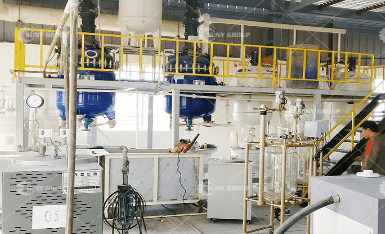
A complete automated lead-acid battery recycling line typically comprises a conveying system, a crushing system, a separation system, an electrolyte treatment unit, and an environmental dust-control system, all operating in a continuous mode.
Spent batteries are first fed via an automatic conveyor into an enclosed crusher. Equipped with wear-resistant alloy blades, the crusher can handle various battery types, including automotive starter batteries, UPS batteries, and industrial energy storage batteries. The crushed mixture then enters a hydraulic separation system, where materials are initially separated based on density differences.
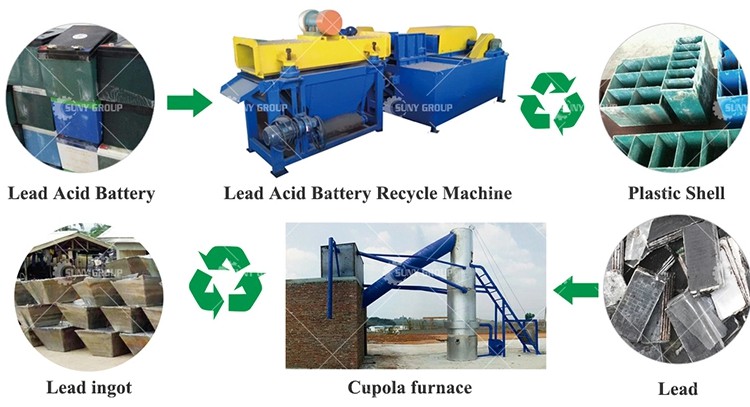
Automated Lead-Acid Battery Recycling Plant
For instance, polypropylene plastic casings have a density of approximately 0.90 g/cm³ and float on the water's surface, whereas lead and lead paste—with densities exceeding 11 g/cm³—rapidly sink to the bottom, enabling efficient physical separation. Compared to manual dismantling, this method offers higher efficiency and significantly reduces the risk of lead dust leakage.
The crusher is a key component of the production line; its rotational speed, blade clearance, and feed control directly impact the effectiveness of subsequent separation stages. A production line with a processing capacity of 1,000 kg/h is typically equipped with a 30–55 kW crusher unit to ensure the thorough liberation of lead grids from plastic casings.
Hydraulic separation equipment determines the purity levels of the recovered lead and plastic. In mature processes, plastic purity often exceeds 98%, while the lead recovery rate surpasses 95%. Some high-end production lines incorporate additional vibrating screens, hydrocyclones, and fine screening systems to further minimize impurity content.
Furthermore, the electrolyte treatment system is an aspect often overlooked. Improper handling of the sulfuric acid electrolyte found in spent lead-acid batteries increases the risk of equipment corrosion and environmental strain. Consequently, most modern production lines employ automatic neutralization units that use an alkaline solution to convert the acid into stable salts before the effluent is sent to the wastewater treatment system. As energy storage systems for new energy vehicles, backup power supplies for telecommunications base stations, and conventional automotive batteries enter a period of mass retirement, the lead-acid battery recycling industry is upgrading from manual dismantling to automated, enclosed, and intelligent operations.
Compared to traditional manual dismantling, the primary value of automated production lines lies not merely in increased production capacity, but in enhanced operational safety achieved through enclosed material handling, negative-pressure dust removal, and online monitoring systems that minimize the spread of lead dust. Furthermore, modular designs allow for flexible scalability—supporting processing capacities of 500 kg/h, 1,000 kg/h, or higher—to meet the diverse needs of recycling enterprises of various sizes.
Future developments in lead-acid battery recycling equipment will focus increasingly on three key areas: improving resource recovery rates, reducing energy consumption, and controlling environmental emissions—factors that are critical to the long-term competitiveness of recycling enterprises.
Thank you for your interest in suny group. If you want to learn more about our E-waste recycling plant, copper wire recycling machine and other machines, Contact us now to find out what we can do for you next project!E-mail:[email protected] | Whatsapp:+8613674945231