Recycling equipment manufacturerFor a green future
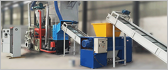
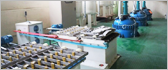
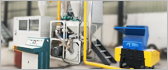
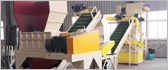


Scrap electric motors typically consist of copper windings, silicon steel sheets, iron casings, aluminum components, and insulating materials. Traditional manual dismantling is inefficient and struggles to meet the demands of large-scale recycling. In contrast, motor crushing and recycling lines utilize mechanized equipment to enable continuous processing.
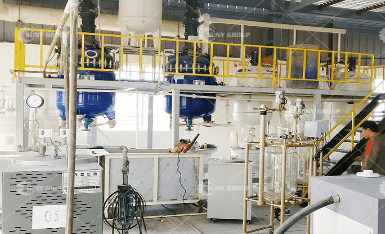
The complete system generally comprises modules such as conveying equipment, a hammer crusher, a magnetic separator, an air separation system, an eddy current separator, and dust removal equipment.
First, the hammer crusher reduces the intact motor casing to particles approximately 50–100 mm in size, fully liberating the copper windings from the iron core structure and achieving a high rate of material dissociation. For high-power industrial motors, some production lines incorporate pre-cutting equipment to reduce impact loads on the rotor and stator, thereby extending the equipment's service life.
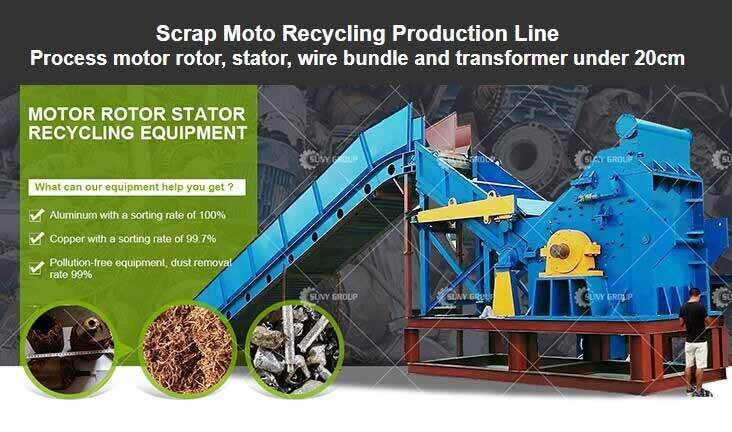
Electric Motor Crushing and Recycling Plant
Effective separation of copper and iron is a critical performance indicator for the entire motor recycling line.
The crushed mixture first passes through a permanent magnet drum separator to extract magnetic materials such as iron casings and silicon steel sheets; the iron recovery rate typically exceeds 98%. Subsequently, the material enters an air separation system to remove lightweight insulating materials and dust, thereby reducing impurity levels.
For the remaining mixture of copper and aluminum particles, eddy current separation equipment is used to separate the non-ferrous metals. Due to the differing electrical conductivities of copper and aluminum, the materials follow distinct trajectories when exposed to a high-speed rotating magnetic field, enabling automatic sorting. In well-optimized production lines, copper purity typically reaches 97%–99%, meeting the requirements for direct remelting by secondary metal enterprises.
Some high-end configurations also include an electrostatic separation system to further purify fine copper particles, thereby maximizing resource recovery efficiency.
As the volume of scrapped household appliances, electric vehicle drive motors, and industrial motors continues to rise, market demand for high-efficiency motor recycling equipment is steadily increasing.
Currently, mainstream motor crushing and recycling lines offer processing capacities ranging from 1,000 kg/h to 5,000 kg/h, with modular configurations available to suit specific feedstock types and investment scales. Compared to manual dismantling, automated production lines reduce manual labor requirements by over 70% while effectively controlling dust emissions and minimizing metal loss.
Thank you for your interest in suny group. If you want to learn more about our E-waste recycling plant, copper wire recycling machine and other machines, Contact us now to find out what we can do for you next project!E-mail:[email protected] | Whatsapp:+8613674945231