Recycling equipment manufacturerFor a green future
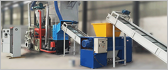
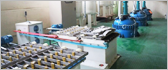
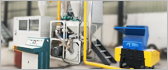
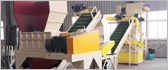
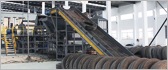


The scrap radiator cutting, separation and recycling machine is a metal recycling piece of equipment specifically designed to process scrap air-conditioning radiators, automotive radiators and copper-aluminium composite radiators. It achieves efficient separation of copper tubes and aluminium fins through cutting, crushing and sorting processes, thereby enhancing the purity and reuse value of the recovered metal. It is suitable for the dismantling of refrigeration equipment and the non-ferrous metal recycling industry.
Equipment Structure and Suitable Material Range
The equipment typically comprises a feed conveyor system, a fixed-length cutting mechanism, a crushing unit, a copper-aluminium separation system and a dust extraction system, with the entire unit designed as a continuous, automated system. The cutting section is responsible for dividing the heat exchangers into uniform segments of a set length, after which they enter the crushing and separation system to ensure complete separation of the copper tubes from the aluminium fins.
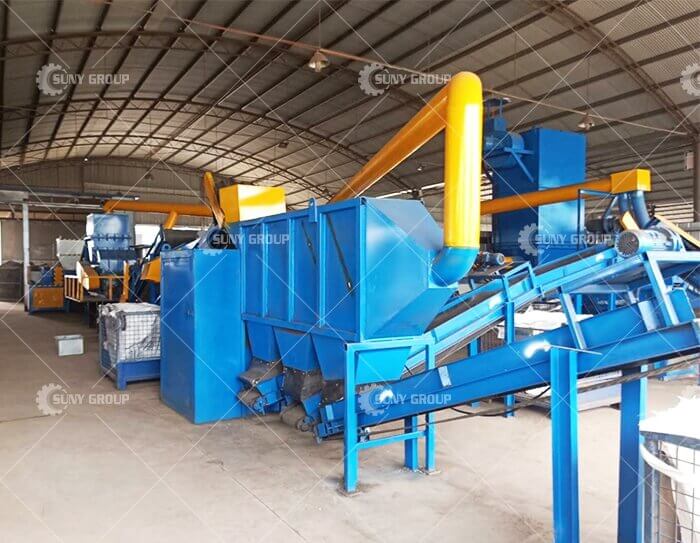
Copper and Aluminium Radiator Recycling Machine
Suitable materials primarily include copper-aluminium composite materials such as air-conditioning radiators, automotive radiators and industrial heat exchangers. The copper-to-aluminium ratio typically ranges from 20%–40% copper to 60%–80% aluminium, offering high resource recovery value.
Cutting and Separation Process Flow
During operation, scrap radiators first enter the cutting unit, where a fixed-length cutting tool cuts the entire structure into small sections suitable for processing. The material then enters the crushing chamber, where mechanical shearing and compression facilitate the initial separation of the copper tubes from the aluminium fins.
The separated mixture enters the sorting system, which typically employs a combination of air classification and vibrating screening: heavier copper tube particles sink and are collected separately, whilst lighter aluminium fins are discharged after being stratified by the airflow or vibration. This process is a dry physical sorting method that requires no water washing, thereby avoiding secondary pollution; it is also equipped with a dust collection system to control the escape of metal dust.
Operational Optimisation and Key Points for Sorting Control
In actual production, differences in radiator structure (such as copper tube wall thickness, aluminium fin density, and the presence or absence of a steel frame) directly affect separation efficiency; therefore, equipment parameters must be dynamically adjusted.
For thin-walled air-conditioning radiators, the cutting feed rate should be reduced to prevent incomplete separation caused by deformation of the copper tubes; for thick-walled automotive radiators, the crushing torque must be increased and the shearing force enhanced to ensure complete separation of copper and aluminium; for mixed scrap heat exchangers, a process involving segmented cutting followed by secondary crushing should be adopted to improve the overall purity of the sorted material.
Generally, the copper–aluminium separation rate during stable operation can reach 95%–98%, with material dryness, blade sharpness and the stability of the air classification system being the key factors affecting efficiency.
Thank you for your interest in suny group. If you want to learn more about our E-waste recycling plant, copper wire recycling machine and other machines, Contact us now to find out what we can do for you next project!E-mail:[email protected] | Whatsapp:+8613674945231