Recycling equipment manufacturerFor a green future
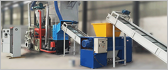
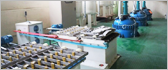
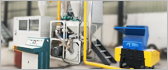
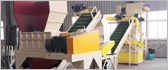


A waste lead-acid battery recycling production line mainly uses equipment such as crushing and sorting, lead paste processing, smelting, refining, and ingot casting to separately recycle lead, plastic, and electrolyte from waste batteries. The equipment configuration directly determines the material separation efficiency, smelting stability, and the final quality of the lead product.
The entire production line typically begins with automatic feeding and battery crushing. Waste lead-acid batteries first enter a conveyor, battery cutter, or crusher to open the battery casing and release the internal materials. EPA data shows that industrial recycling systems often use slow-speed sawing equipment and hammer crushers to complete battery crushing. After crushing, the batteries pass through a hydraulic separator, flotation/sedimentation equipment, vibrating screen, and dewatering equipment to separate lead paste, lead grids, PP plastic, and other impurities according to density and particle size.
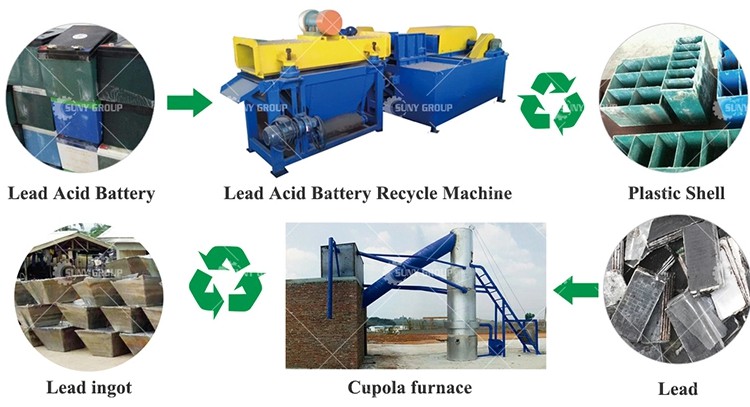
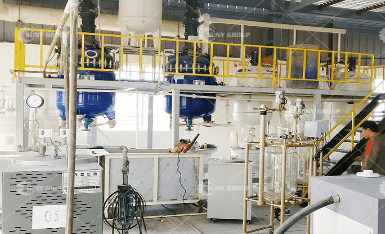
Lead-Acid Battery Recycling and Smelting Plant
The pre-treated lead paste, lead grids, and lead-containing residue enter the lead smelting furnace. Depending on the raw material composition, production capacity, and process requirements, equipment such as a rotary kiln, reverberatory furnace, or blast furnace can be used. The core purpose of smelting is to convert lead compounds into crude lead under high-temperature conditions, while simultaneously enriching iron, silicon, copper, and other impurities into the slag or flue dust.
The crude lead obtained from smelting still contains impurities such as antimony, arsenic, copper, and tin, therefore it needs to be transferred to a refining boiler or furnace for impurity removal and alloy composition adjustment. During the refining process, through feeding, stirring, slag skimming, and temperature control, different impurities are gradually introduced into the slag or form separable intermediate products. EPA data shows that secondary lead smelting typically includes four main stages: raw material preparation, smelting, refining, alloying, and casting; the refined lead liquid ultimately enters the casting equipment to form standardized products.
Therefore, a complete Lead-Acid Battery Recycling, Smelting, and Refining Plant is not a single "waste battery shredder," but a continuous process system consisting of a Battery Breaker, Separation System, Paste Treatment, Smelting Furnace, Refining Furnace, Casting Machine, and Dust and Wastewater Treatment. When selecting equipment, the specific configuration should be determined based on the source of waste batteries, the processing volume, the purity of lead products, and local environmental protection requirements.
Thank you for your interest in suny group. If you want to learn more about our E-waste recycling plant, copper wire recycling machine and other machines, Contact us now to find out what we can do for you next project!E-mail:[email protected] | Whatsapp:+8613674945231