Recycling equipment manufacturerFor a green future
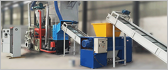
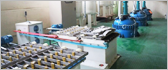
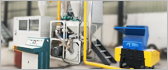
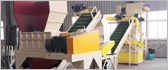
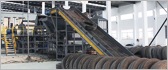


A lithium battery and mobile phone battery processing production line uses equipment such as discharge pretreatment, crushing, screening, magnetic separation, and airflow separation to convert waste batteries into black powder, copper and aluminum metals, and other separable materials, providing raw materials for subsequent metal extraction.
Waste mobile phone batteries, consumer electronics batteries, and some small lithium batteries are characterized by their small size, significant structural differences, and mixture of metals and plastics. Therefore, the production line typically employs multi-stage processing rather than a single machine completing the entire recycling process.
The front end is equipped with a feeding machine and pretreatment equipment to classify the batteries, perform necessary discharge, and process the casing. Subsequently, a dual-shaft shredder or a dedicated crusher initially crushes the batteries, reducing the material size and creating conditions for subsequent fine separation. For pouch batteries, cylindrical batteries, and prismatic batteries, the blade structure, feeding method, and crushing gap need to be adjusted according to the actual material.
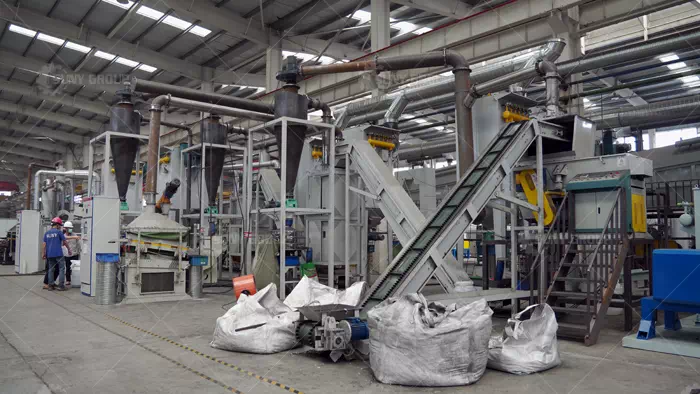
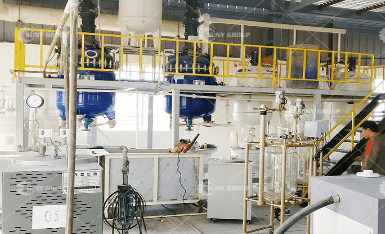
Lithium and Mobile Battery Processing Plant
The coarsely crushed battery material enters a fine crusher, further separating the electrode materials from the casing, current collector, and other components. Vibrating screens classify materials by particle size, magnetic separators remove ferromagnetic impurities, and air classifiers utilize differences in material density and air resistance to separate lightweight materials such as separators and plastics from heavier metals and electrode materials.
Some production lines are equipped with heat treatment equipment to reduce the impact of residual electrolyte and organic components on subsequent processing. The heat treatment temperature, residence time, and exhaust gas treatment methods need to be determined based on the battery chemistry and process requirements; uniform parameters cannot be simply applied.
After multi-stage crushing and sorting, the system obtains black powder containing elements such as lithium, nickel, cobalt, and manganese, as well as metallic components such as copper and aluminum. This black powder typically requires further processing using hydrometallurgy or other advanced extraction processes to recover valuable metals.
The design focus of lithium battery recycling equipment is not only on throughput but also on stable material transport, dust control, and handling of abnormal operating conditions. Production lines can be equipped with PLC control cabinets, conveyors, dust removal systems, temperature monitoring, and interlocking devices to achieve coordinated equipment start-up and shutdown and monitoring of operational status.
For small batteries such as mobile phone batteries, it is recommended to specify the battery type, average size, moisture content, residual charge, and target output during the design phase. For example, there are significant differences between a 100 kg/h and a 1 t/h production line in terms of crusher specifications, conveying capacity, dust removal airflow, and the number of sorting devices.
The actual configuration should be based on the raw material composition, target recovery rate, and final product specifications. For flammable electrolytes and materials containing residual battery charge, appropriate fire protection, ventilation, and safety protection systems should also be configured in accordance with local regulations.
Thank you for your interest in suny group. If you want to learn more about our E-waste recycling plant, copper wire recycling machine and other machines, Contact us now to find out what we can do for you next project!E-mail:[email protected] | Whatsapp:+8613674945231