Recycling equipment manufacturerFor a green future
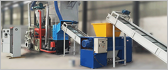
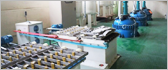
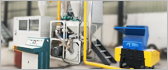
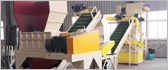


Waste PCBs cannot simply be ‘shredded and then separated’; what truly determines the effectiveness of subsequent sorting is whether the metal and resin substrate can be sufficiently separated. Consequently, the equipment typically employs a multi-stage crushing configuration.
First, a twin-shaft shredder performs coarse crushing, processing whole circuit boards into smaller fragments; these then enter a hammer mill for secondary crushing, further dispersing the copper foil, solder joints and resin substrate. Some production lines are also equipped with high-speed fine grinders to further grind the material to a particle size suitable for sorting.
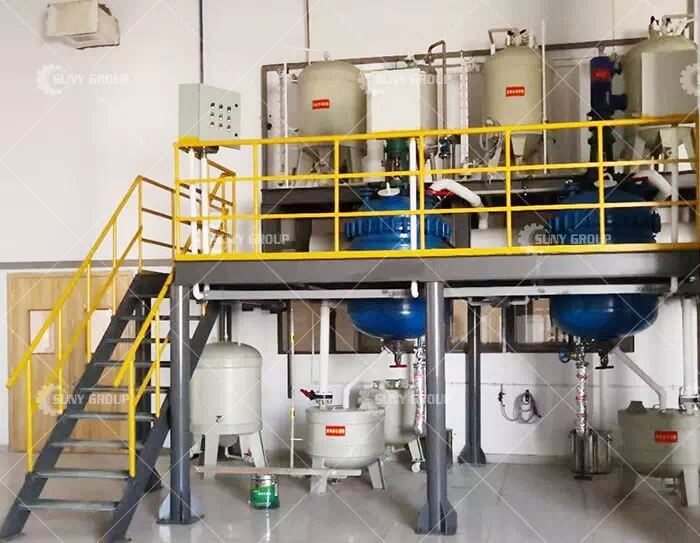
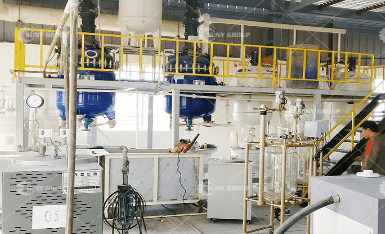
PCB Recycling & Metal Extraction Machine
SUNY GROUP’s PCB recycling lines employ a ‘shredding–crushing–fine grinding’ combination, supplemented by screening and recirculation mechanisms, ensuring that material failing to meet particle size requirements or that has not been sufficiently separated is returned to the grinding stage. According to published equipment specifications, production capacities range from approximately 100–150 kg/h to 800–1,000 kg/h, with different throughput levels corresponding to varying installed power ratings and equipment dimensions.
Following grinding, the PCBs form a mixture comprising metal powder, resin powder and glass fibres. The equipment first utilises an air classifier to perform preliminary separation based on material density and aerodynamic properties, separating the lighter resin fibres from the heavier metal particles.
The material then enters a high-voltage electrostatic separator. Conductive metals such as copper exhibit different movement characteristics in an electric field compared to non-conductive materials such as resins and fibres, thereby enabling further refined separation. This dry physical separation method does not rely on acid leaching or chemical agents, making it more suitable for continuous mechanical recovery. Relevant research also indicates that a combination of appropriate crushing, screening and corona electrostatic separation can effectively recover metals from PCBs.
The entire production line typically also includes vibrating screens, pulse dust collectors, conveyor systems and a PLC control cabinet. Among these, the dust collection system is not merely ancillary equipment but a core component that cannot be overlooked in the PCB crushing process, as it reduces the ingress of fine dust into the production workshop; the PLC is responsible for coordinating the start-up, feeding and operational status of each piece of equipment, thereby enhancing the stability of continuous production. In the equipment solutions published by SUNY GROUP, certain configurations utilise negative-pressure conveying and pulse-jet dust collectors, and are equipped with automatic control systems.
The PCB Recycling & Metal Extraction Machine is primarily suitable for the resource recovery of waste computer motherboards, mobile phone circuit boards, television circuit boards, copper-clad laminates and certain types of electronic waste. The process typically yields two main products: metal powder and resin fibre powder, with the metal fraction being suitable for further smelting or refining.
Thank you for your interest in suny group. If you want to learn more about our E-waste recycling plant, copper wire recycling machine and other machines, Contact us now to find out what we can do for you next project!E-mail:[email protected] | Whatsapp:+8613674945231