Recycling equipment manufacturerFor a green future
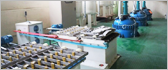
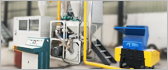
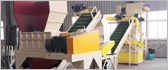
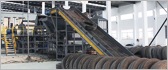


Equipment for recycling spent lithium-ion batteries employs processes such as safe pre-treatment, crushing, heat treatment, screening, and air classification to sequentially separate "black mass" (active material powder), copper, aluminum, steel casings, and separators. This achieves both the reduction of hazardous waste and the recovery of valuable materials.
A complete lithium-ion battery recycling line typically consists of multiple pieces of specialized equipment rather than a single machine. Equipment configurations are adjusted based on battery type, processing scale, and the specifications required for the final recovered products.
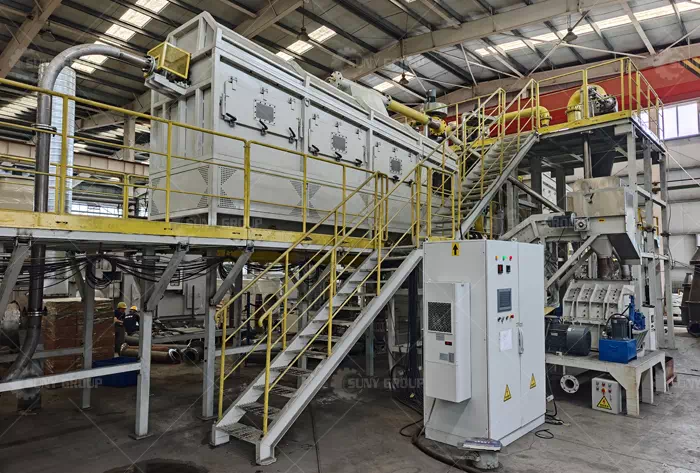
Machinery Used for Recycling Lithium-Ion Batteries
The process begins with feeding and pre-treatment equipment. Power batteries, pouch cells, cylindrical cells, and small modules undergo unpacking, discharging, or pre-treatment based on their dimensions before entering the crushing system. Because the crushing process carries risks of residual electrical energy and thermal runaway, some production lines incorporate nitrogen inerting, oxygen level monitoring, and enclosed conveying structures. In industrial systems, maintaining an inert atmosphere keeps oxygen levels in the crushing zone low, thereby reducing the risk of combustion.
Core crushing equipment includes dual-shaft or single-shaft shredders, secondary crushers, and fine crushers. Primary crushing breaks down the cells or modules, while secondary crushing further liberates copper foil, aluminum foil, and the active materials adhering to the electrode sheets. Finer crushing is not always better; excessive pulverization increases energy consumption and can complicate subsequent screening processes.
The crushed mixture typically passes through heat treatment equipment, magnetic separators, vibrating screens, rotary screens (trommels), air classifiers, and copper-aluminum separation equipment.
Heat treatment or pyrolysis equipment is primarily used to remove electrolytes, separators, and certain organic binders, making it easier for the active cathode and anode materials to detach from the metal foils. Some processes utilize controlled heat treatment at approximately 400°C, though the specific temperature is determined by the battery's chemical composition and the process design.
Subsequently, magnetic separators are used to remove magnetic metals such as steel casings; vibrating screens or rotary screens utilize particle size differences to separate the fine black mass particles from the larger copper and aluminum foil fragments. The U.S. EPA notes that the shredding of lithium-ion batteries typically yields distinct material streams, such as black mass, copper and aluminum foils, separators, plastics, steel casings, and electrolytes.
For the remaining mixture of copper, aluminum, and plastics, the processing line can be further equipped with air classifiers, gravity separators, or copper-aluminum separators. The core principle involves separating materials based on differences in density, shape, and air resistance, rather than relying on a single screening step to achieve complete recovery.
Thank you for your interest in suny group. If you want to learn more about our E-waste recycling plant, copper wire recycling machine and other machines, Contact us now to find out what we can do for you next project!E-mail:[email protected] | Whatsapp:+8613674945231