Recycling equipment manufacturerFor a green future
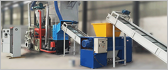
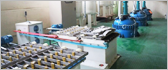
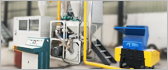
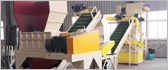
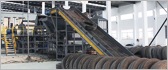


The PCB e-waste recycling machine separates metal and non-metal materials from waste PCBs primarily through mechanical processes such as shredding, pulverizing, screening, and air separation. This provides stable feedstock for the subsequent recovery of metal resources like copper and aluminum.
Waste PCBs are typically composite structures made of materials such as fiberglass, resin, and copper. Due to their compact structure, achieving efficient separation through manual dismantling is difficult. In particular, after copper-clad laminates are shredded, metal particles tend to mix with non-metal fibers, meaning a single shredder is usually insufficient for complete recovery.
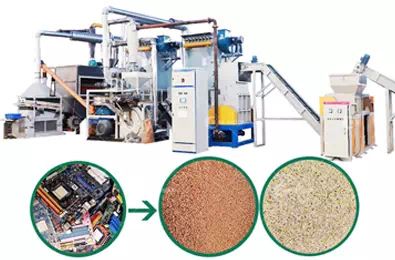
PCB e-waste recycling machines typically employ a multi-stage processing structure. The front end can be equipped with a dual-shaft shredder or coarse crusher to break down large PCBs into smaller pieces; the material then enters a high-speed pulverizer to further liberate the copper foil from the substrate. Depending on the equipment configuration, the particle size of the pulverized material can usually be controlled within the 2–10 mm range, creating optimal conditions for subsequent separation.
Core Equipment and Separation Process
A complete PCB recycling system typically includes:
Primary Shredder: Processes large, irregularly shaped PCBs and reduces feed size.
Hammer Mill / Pulverizer: Further pulverizes the material to ensure full liberation of metals and non-metals.
Vibrating Screen: Screens material by particle size to improve the stability of downstream separation.
Air Separator: Separates lightweight resin and fiberglass from heavier metal particles based on differences in material density and aerodynamics.
Magnetic Separator: Removes or recovers ferromagnetic metals.
Dust Collection System: Collects fine dust generated during pulverization, improving the operating environment.
There is a direct relationship between the degree of pulverization and separation efficiency. Excessive coarseness leaves copper and non-metals bonded together, while excessive fineness increases dust generation and energy consumption. Therefore, for PCB recycling lines, "finer is not necessarily better"; instead, the number of crushing stages must be optimized based on the board type and target particle size.
Thank you for your interest in suny group. If you want to learn more about our E-waste recycling plant, copper wire recycling machine and other machines, Contact us now to find out what we can do for you next project!E-mail:[email protected] | Whatsapp:+8613674945231