Recycling equipment manufacturerFor a green future
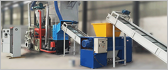
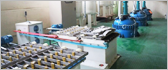
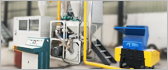
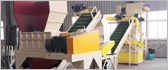
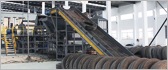


The waste tire recycling production line continuously processes waste tires into rubber granules, rubber powder, steel wire, and nylon fibers through tire shredding, steel wire separation, fiber separation, rubber granulation, and fine grinding. Equipment configuration can be adjusted according to raw material specifications, production capacity, and final particle size.
Tyre Shredder: From Whole Tire to Tire Pieces
After entering the production line, waste tires undergo cutting and coarse crushing to transform them into tire pieces suitable for subsequent processing. The tire shredder handles the volume reduction and initial crushing of large-sized materials. After processing, the tire pieces are typically controlled to approximately 3–8 cm in size before entering the subsequent rubber crushing and separation equipment.
SUNY GROUP's waste tire recycling equipment can be designed with different processing capacities according to project requirements. Currently, the rubber granule production lines listed on this page include specifications such as 400–500 kg/h, 800–1000 kg/h, 1800–2000 kg/h, and 2500–3000 kg/h, corresponding to a total power of approximately 185–639 kW. Actual configuration will be determined based on production capacity and the number of individual machines.
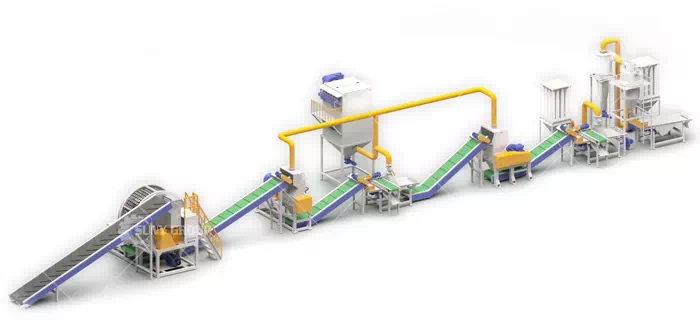
Tyre Shredder Rubber Powder Grinding Line
Metal Separator & Fiber Separation: Separating Steel Wires and Fibers
After tires are shredded, they are not just rubber. If the internal steel wires and nylon fibers are not separated in time, it will affect the purity of the rubber granules and increase wear on subsequent grinding equipment. Therefore, production lines typically include steel wire separators, magnetic separators, and fiber separators to gradually remove metals and lightweight fibers from the tires.
On the rubber granule production line, 3–8 cm tire blocks are further crushed into approximately 1–6 mm rubber granules, and steel wires and nylon fibers are removed by separation equipment. Depending on the screening configuration, rubber granules of different sizes, such as 0–2 mm, 3–4 mm, and 5–6 mm, can also be obtained simultaneously.
Ruber Grinder: Further Processing Rubber Granules into Rubber Powder
If the final product is not rubber granules but rubber powder for use in modified asphalt, rubber products, etc., it needs to continue to be processed into rubber pulverizers and grinding equipment after particle separation. This system further processes tire rubber to a specified fineness through multi-stage crushing, grinding, and screening.
According to the SUNY GROUP equipment page, the waste tire production line can produce rubber granules ranging from 0–6 mm, and rubber powder fineness can be processed to 5–120 mesh according to customer requirements.
A complete waste tire recycling system can ultimately yield four types of products: rubber granules, rubber powder, steel wire, and nylon fiber. For projects requiring standardized products, it is recommended to determine the target particle size and capacity directly during the equipment selection phase, and then work backward to determine the number of shredding, separating, grinding, and screening equipment. This is more reasonable than compensating for insufficient capacity later by adding individual machines.
Thank you for your interest in suny group. If you want to learn more about our E-waste recycling plant, copper wire recycling machine and other machines, Contact us now to find out what we can do for you next project!E-mail:[email protected] | Whatsapp:+8613674945231