Recycling equipment manufacturerFor a green future


With the rapid increase in the volume of waste mobile phones, computer motherboards, servers, printed circuit boards and telecommunications equipment, electronic waste has become a significant ‘urban mine’. Research data indicates that 1 metric tonne of high-grade waste printed circuit boards can contain 200–300 grams of gold, far exceeding the average grade of 1–5 grams per metric tonne found in natural gold mines, whilst metals such as silver, copper and palladium also possess high recovery value.
However, electronic waste has a complex composition, with metals, plastics, glass fibre and resins highly intermingled. If subjected to direct smelting, this not only results in high energy consumption but also increases subsequent purification costs. Consequently, efficient physical pre-treatment equipment has become a crucial link in precious metal recovery production lines, determining both recovery rates and economic viability.
Multi-stage crushing and fine sorting equipment enhance metal enrichment rates
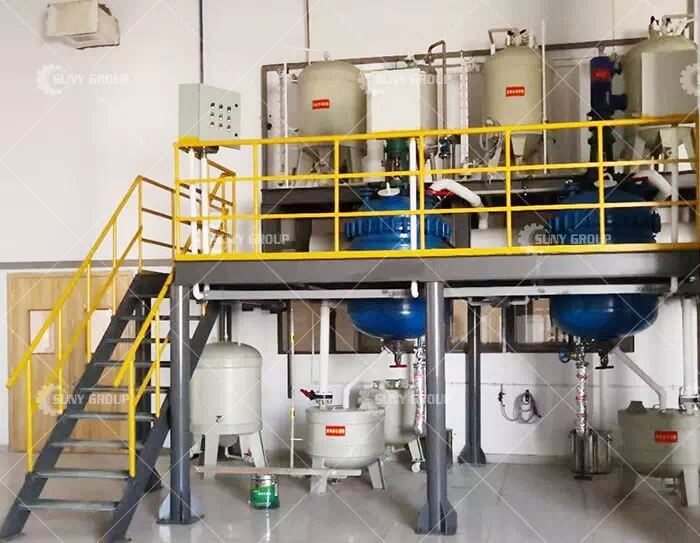
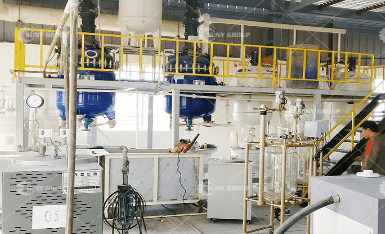
Extracting Gold and Silver from E-Waste Machine
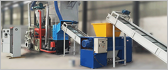
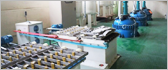
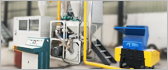
A complete set of equipment for the extraction of precious metals from electronic waste typically includes a twin-shaft shredder, a hammer mill, a magnetic separator, an air classification system, a gravity separation system and electrostatic separation equipment.
First, large pieces of electronic waste undergo coarse crushing in the shredder, reducing motherboards, circuit boards and electronic components to a size suitable for subsequent processing. The material then passes through a fine crushing system to further reduce particle size, ensuring thorough separation of metallic and non-metallic materials.
During the sorting stage, magnetic separation equipment prioritises the recovery of ferromagnetic materials; the air classification system utilises density differences to separate lightweight resins and fibres; whilst high-voltage electrostatic separation equipment utilises differences in electrical conductivity to achieve efficient separation of copper powder from non-metallic powders. In mature production lines, the purity of separated copper typically reaches over 98 per cent, providing high-quality raw materials for subsequent hydrometallurgical or pyrometallurgical refining.
Precious metal extraction equipment is evolving towards automation and environmental sustainability
High-value metal powders produced following physical enrichment can then proceed to hydrometallurgical gold and silver extraction or refining systems, enabling the recovery of gold, silver and other rare and precious metals. Compared to direct chemical processing, this end-to-end graded recovery process not only reduces chemical consumption but also alleviates the burden of waste liquid treatment, thereby enhancing overall resource utilisation efficiency.
Thank you for your interest in suny group. If you want to learn more about our E-waste recycling plant, copper wire recycling machine and other machines, Contact us now to find out what we can do for you next project!E-mail:[email protected] | Whatsapp:+8613674945231